How to Tell Real Hand Tooling from Imitation
How to Tell Real Hand Tooling from Imitation
Heritage Articles
Heritage Articles
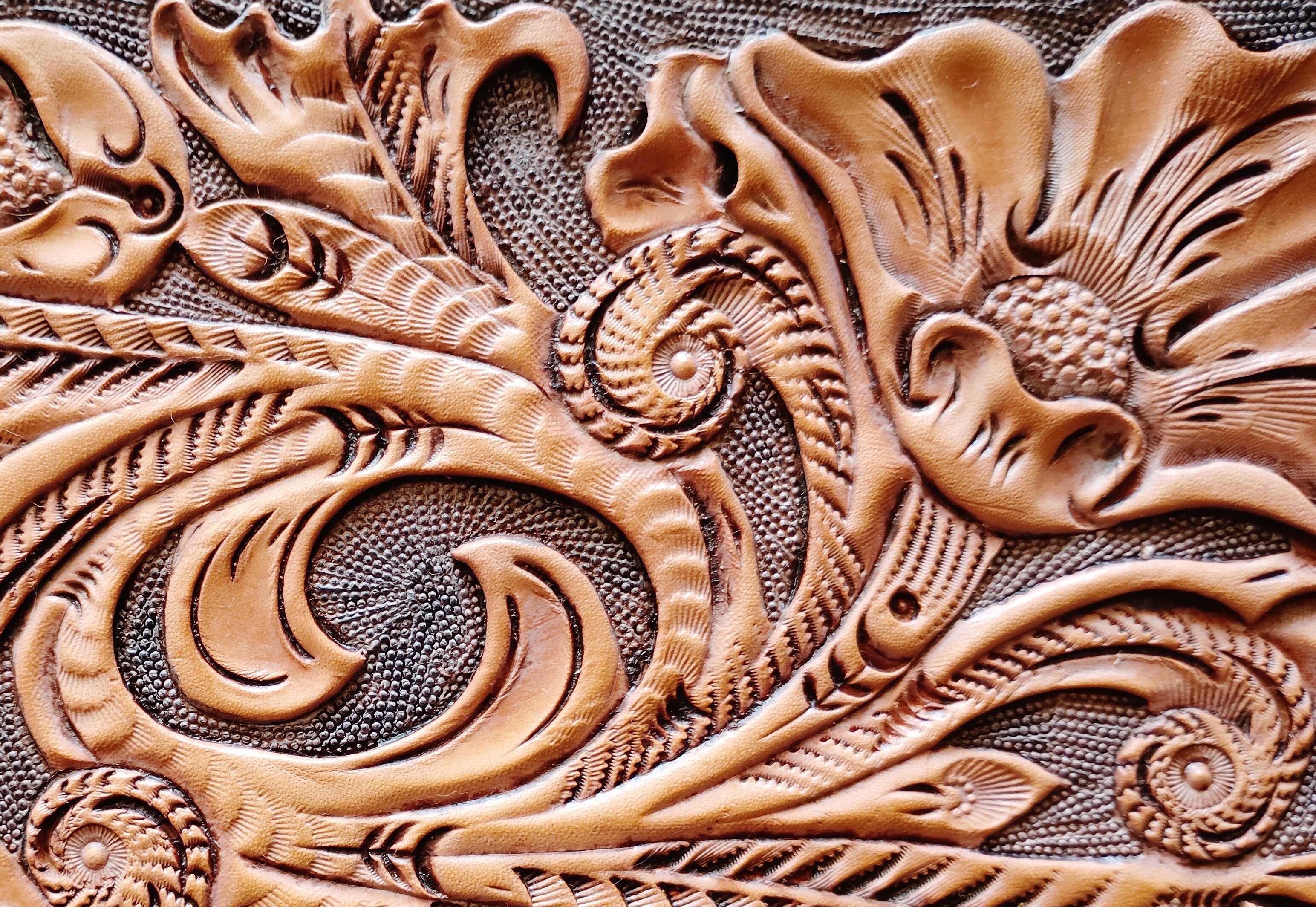
A guide to recognizing true Western leathercraft.
A guide to recognizing true Western leathercraft.
Preservation begins with understanding what was truly made and how.
Not all tooled leather is what it appears to be.
In Western craft, the difference between real hand tooling and machine manufactured imitation is not always obvious at first glance. Modern production methods can replicate the appearance of handmade work with amazing accuracy. Patterns can be pressed, embossed, or mechanically applied in ways that suggest hand-made craftsmanship.
But real hand tooling leaves evidence of the hand that created it.
It carries the record of physically applied pressure, depth, rhythm, variation, and intention. Once you learn how to recognize those qualities, the difference becomes impossible to ignore.
For collectors, designers, and anyone commissioning Western leatherwork, that distinction matters.
Real hand tooling is carved into the leather
Authentic hand tooling is not printed or pressed onto the surface. It is worked into the material itself.
A leatherworker begins by carving the design with a swivel knife, then uses bevelers, shaders, backgrounders, and other hand tools to create depth, contour, and contrast. The finished result has a sculptural quality. The pattern feels integrated into the leather rather than placed on top of it.
Imitation tooling often lacks that dimensional character. It may look detailed in photographs, but in person it tends to read as surface treatment rather than true relief.
What to look for
View the piece at eye level. Slightly tilt the piece. View the piece under shifting light. Genuine hand tooling reveals changing shadow, depth, and subtle contour across the design.
Variation is often a sign of authenticity
The maker’s hand does not produce perfect repetition and that is precisely the point.
In true hand tooling, cuts and impressions will show slight variation in pressure, spacing, and movement. Petals, scrolls, and leaves may follow the same pattern language, but they will not feel mechanically duplicated. Each individual flower will not be perfect. The piece will reveal a rhythm with a level of control, but feel alive.
Imitation work often appears too consistent. Repeating elements can look exact, overly regular, or unnaturally uniform.
What to look for
Study repeated forms closely. If every impression appears identical, the work may be pressed or machine-produced rather than hand-tooled.
Crisp cut lines reveal real carving
One of the clearest signs of authentic tooling is the character of the cut line itself.
A swivel knife cut has life to it. It enters and exits the leather with natural taper. It creates crisp edges and directional movement that reflect the control of the maker’s hand.
In imitation work, lines often appear blunt, shallow, or too even from beginning to end. They may suggest a pattern, but they lack the sharpness of true carved leather.
What to look for
Examine where lines begin, narrow, deepen, and release. Hand work almost always shows greater complexity in those transitions.
Background texture should feel worked, not printed
Traditional Western tooling often uses background texture to create contrast and bring the carved pattern forward.
In genuine hand-tooled work, that background usually carries slight irregularity. The spacing may shift subtly. The impressions feel placed by hand rather than mechanically repeated. If stained, these irregularity may be even more apparent.
In imitation work, background texture can look too uniform, too flat, or too repetitive across the surface.
What to look for
Look beyond the main floral design. The background often reveals more truth than the centerpiece.
Real tooling ages with character
Because genuine tooling is carved into the leather, it tends to wear beautifully over time.
The high points soften. The edges burnish. The depth remains visible. The piece develops character without immediately losing its definition.
Imitation tooling often ages differently. Because the effect is more superficial, the design can flatten visually, wear inconsistently, or lose its clarity more quickly.
What to look for
A well-made hand-tooled piece tends to retain presence even as it acquires patina.
The deeper difference is not decoration, but discipline
At its best, hand tooling is not merely ornament applied to leather. It is a learned discipline shaped by training, judgment, and repetition.
A skilled leatherworker understands proportion, flow, spacing, edge control, and how a pattern should move across a surface. The design is not simply copied. It is interpreted through the maker’s hand.
That is what imitation cannot fully reproduce.
It can borrow the appearance of craft, but not the intelligence behind it.
Why this matters
Knowing how to identify real hand tooling changes the way a piece is valued.
It allows collectors to buy more intelligently. It helps designers' source with greater confidence. And it gives the work of true artisans the recognition and respect it deserves.
What may seem, at first, like a decorative leather surface is often something much more significant: evidence of apprenticeship, discipline, and inherited skill.
That distinction is exactly why these traditions remain worth preserving.
Commissioning work rooted in true Western craft
Provenance West works to document, source, and commission objects grounded in the enduring craft traditions of the American West.
For collectors, designers, and clients seeking leatherwork with historical depth and material integrity, we develop commissioned studies and objects that honor the language of authentic hand craft.
Inquire about:
custom leather panel studies
archival display pieces
Western craft commissions
sourcing and advisory for heritage leatherwork
To inquire, contact Provenance West through our Contact page
Provenance West
We document, source, and commission objects rooted in the enduring craft traditions of the American West.
Not all tooled leather is what it appears to be.
In Western craft, the difference between real hand tooling and machine manufactured imitation is not always obvious at first glance. Modern production methods can replicate the appearance of handmade work with amazing accuracy. Patterns can be pressed, embossed, or mechanically applied in ways that suggest hand-made craftsmanship.
But real hand tooling leaves evidence of the hand that created it.
It carries the record of physically applied pressure, depth, rhythm, variation, and intention. Once you learn how to recognize those qualities, the difference becomes impossible to ignore.
For collectors, designers, and anyone commissioning Western leatherwork, that distinction matters.
Real hand tooling is carved into the leather
Authentic hand tooling is not printed or pressed onto the surface. It is worked into the material itself.
A leatherworker begins by carving the design with a swivel knife, then uses bevelers, shaders, backgrounders, and other hand tools to create depth, contour, and contrast. The finished result has a sculptural quality. The pattern feels integrated into the leather rather than placed on top of it.
Imitation tooling often lacks that dimensional character. It may look detailed in photographs, but in person it tends to read as surface treatment rather than true relief.
What to look for
View the piece at eye level. Slightly tilt the piece. View the piece under shifting light. Genuine hand tooling reveals changing shadow, depth, and subtle contour across the design.
Variation is often a sign of authenticity
The maker’s hand does not produce perfect repetition and that is precisely the point.
In true hand tooling, cuts and impressions will show slight variation in pressure, spacing, and movement. Petals, scrolls, and leaves may follow the same pattern language, but they will not feel mechanically duplicated. Each individual flower will not be perfect. The piece will reveal a rhythm with a level of control, but feel alive.
Imitation work often appears too consistent. Repeating elements can look exact, overly regular, or unnaturally uniform.
What to look for
Study repeated forms closely. If every impression appears identical, the work may be pressed or machine-produced rather than hand-tooled.
Crisp cut lines reveal real carving
One of the clearest signs of authentic tooling is the character of the cut line itself.
A swivel knife cut has life to it. It enters and exits the leather with natural taper. It creates crisp edges and directional movement that reflect the control of the maker’s hand.
In imitation work, lines often appear blunt, shallow, or too even from beginning to end. They may suggest a pattern, but they lack the sharpness of true carved leather.
What to look for
Examine where lines begin, narrow, deepen, and release. Hand work almost always shows greater complexity in those transitions.
Background texture should feel worked, not printed
Traditional Western tooling often uses background texture to create contrast and bring the carved pattern forward.
In genuine hand-tooled work, that background usually carries slight irregularity. The spacing may shift subtly. The impressions feel placed by hand rather than mechanically repeated. If stained, these irregularity may be even more apparent.
In imitation work, background texture can look too uniform, too flat, or too repetitive across the surface.
What to look for
Look beyond the main floral design. The background often reveals more truth than the centerpiece.
Real tooling ages with character
Because genuine tooling is carved into the leather, it tends to wear beautifully over time.
The high points soften. The edges burnish. The depth remains visible. The piece develops character without immediately losing its definition.
Imitation tooling often ages differently. Because the effect is more superficial, the design can flatten visually, wear inconsistently, or lose its clarity more quickly.
What to look for
A well-made hand-tooled piece tends to retain presence even as it acquires patina.
The deeper difference is not decoration, but discipline
At its best, hand tooling is not merely ornament applied to leather. It is a learned discipline shaped by training, judgment, and repetition.
A skilled leatherworker understands proportion, flow, spacing, edge control, and how a pattern should move across a surface. The design is not simply copied. It is interpreted through the maker’s hand.
That is what imitation cannot fully reproduce.
It can borrow the appearance of craft, but not the intelligence behind it.
Why this matters
Knowing how to identify real hand tooling changes the way a piece is valued.
It allows collectors to buy more intelligently. It helps designers' source with greater confidence. And it gives the work of true artisans the recognition and respect it deserves.
What may seem, at first, like a decorative leather surface is often something much more significant: evidence of apprenticeship, discipline, and inherited skill.
That distinction is exactly why these traditions remain worth preserving.
Commissioning work rooted in true Western craft
Provenance West works to document, source, and commission objects grounded in the enduring craft traditions of the American West.
For collectors, designers, and clients seeking leatherwork with historical depth and material integrity, we develop commissioned studies and objects that honor the language of authentic hand craft.
Inquire about:
custom leather panel studies
archival display pieces
Western craft commissions
sourcing and advisory for heritage leatherwork
To inquire, contact Provenance West through our Contact page
Provenance West
We document, source, and commission objects rooted in the enduring craft traditions of the American West.
Pages
Home
About
Heritage Editions
Resources
Craft Traditions
Contact Us
Privacy Policy
Pages
Home
About
Heritage Editions
Resources
Craft Traditions
Contact Us
Privacy Policy
Pages
Home
About
Heritage Editions
Resources
Craft Traditions
Contact Us
Privacy Policy