Why the American West Still Needs Its Makers
Why the American West Still Needs Its Makers
Heritage Articles
Heritage Articles
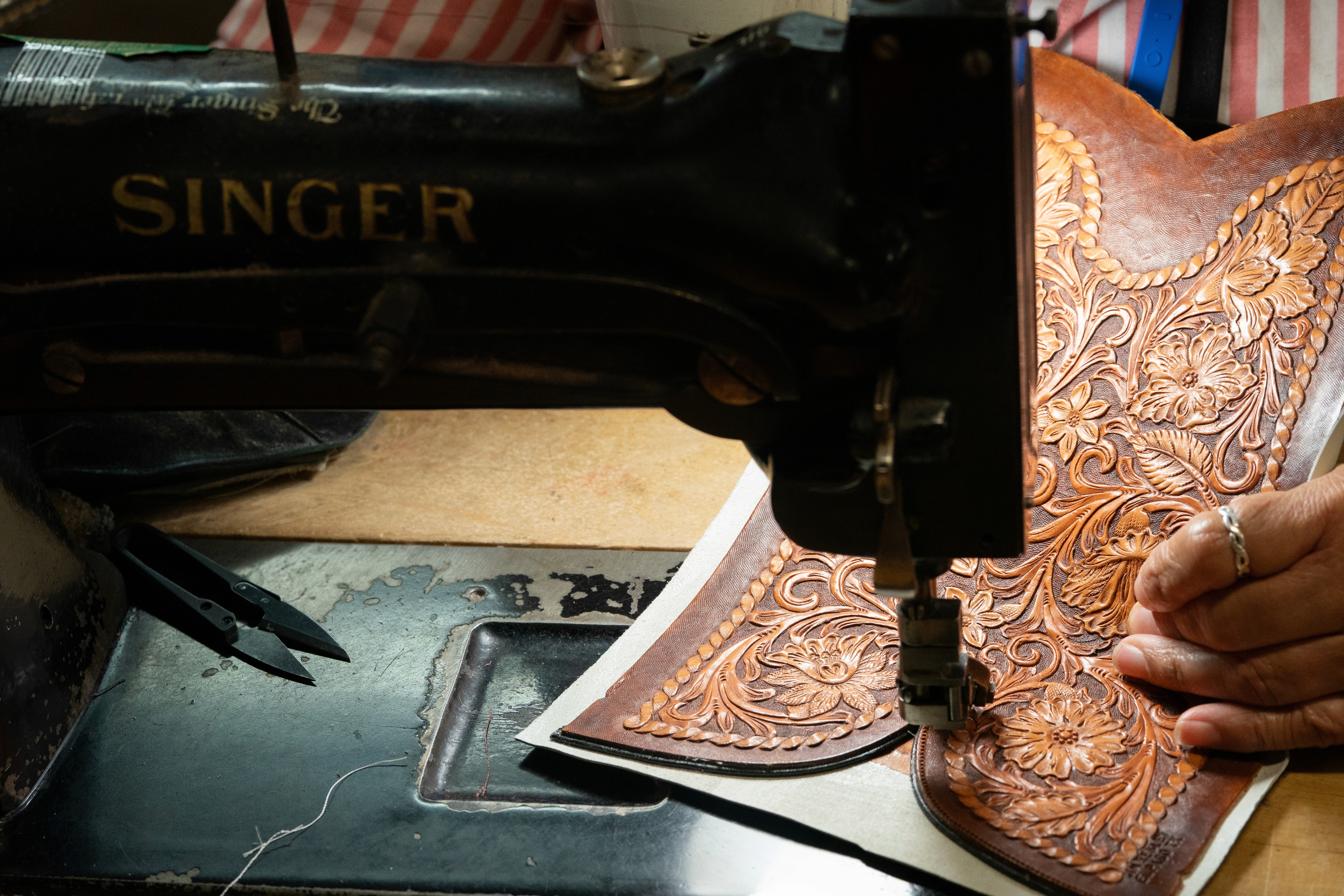
A Craft Tradition.
A Craft Tradition.
Celebrating the enduring artistry of craftsmanship across the American West.
Celebrating the enduring artistry of craftsmanship across the American West.
“The objects of the West were never only functional. They carried skill, identity, and the mark of the maker.”
“The objects of the West carried skill, identity, and the mark of the maker.”
— Provenance West
On craft, continuity, and the objects that carry meaning
There was a time when the American West depended on makers not as a luxury, but as a necessity.
A saddle was not decoration. A bosal was not an artifact. A spur, a rowel, a hand-braided rein, a forged bucklethese were tools shaped for use, built with precision because failure in material meant failure in life. Every stitch, braid, hammered edge, and engraved line carried purpose. These objects were made to withstand distance, labor, and time.
What remains remarkable is that many of these traditions still exist.
Across the American West, in workshops and small studios, artisans continue to shape rawhide, tool leather, forge metal, and work materials according to standards passed through generations. Their work reflects knowledge refined long before industrial production replaced the maker’s hand.
Yet these traditions now exist in a different environment.
From necessity to interpretation
In earlier periods, Western craft was defined by use.
Objects were judged by how they performed, how they aged, and how they responded under pressure. Form followed function, and refinement emerged through repetition and necessity.
Today, many of these same objects are encountered differently.
They are collected, displayed, and reproduced often with attention to visual detail, but with less connection to the conditions that shaped them. The result is a gradual shift from understanding to interpretation.
Objects remain visible.
Their original context becomes less so.
The erosion of distinction
As traditional knowledge becomes less accessible, the distinction between authentic craftsmanship and imitation becomes more difficult to recognize.
Modern manufacturing is capable of reproducing the visual language of Western craft with increasing accuracy. Patterns can be replicated. Surfaces can be simulated. Forms can be reproduced at scale.
But craftsmanship is not defined by appearance alone.
It is defined by:
the method of making
the relationship between material and form
the proportion and balance of the object
and the judgment of the maker
When these elements are absent, what remains is resemblance without substance.
Over time, this reshapes expectation.
And when expectation shifts, standards follow.
The role of the maker
The maker remains the central figure in preserving these traditions.
A saddle maker does not simply assemble materials. A braider does not merely replicate a pattern. A silversmith does not only produce ornament. Each works within a system of knowledge built through apprenticeship, repetition, and refinement.
That knowledge is not interchangeable.
It is carried in:
hand skill
material familiarity
decision-making developed over time
To engage with a maker is to engage with that continuity.
To lose that connection is to reduce the object to form without meaning.
Craft as cultural language
The objects of the American West function as more than tools or decorative forms.
They operate as a kind of language.
A braided rawhide bosal reflects vaquero tradition and refinement.
A hand-cut rowel reflects both function and metallurgy.
A tooled leather panel reflects regional schools of design and apprenticeship.
Each carries information about:
place
use
and inherited practice
When that language is no longer understood, the object remains—but its meaning is diminished.
Why this matters now
The relevance of these traditions is not confined to the past.
In a contemporary environment defined by speed, replication, and disposability, the presence of objects made with time, discipline, and material understanding carries increased significance.
They offer:
durability over replacement
knowledge over approximation
continuity over trend
The American West still needs its makers because makers sustain the connection between what was established and what continues.
Without them, the region becomes defined by image rather than substance.
A role in preservation
Preserving Western craft requires more than maintaining objects.
It requires:
documenting methods
supporting active makers
and ensuring that standards of workmanship remain visible and understood
This is not a passive process. It depends on deliberate recognition of what distinguishes authentic work from imitation, and on continued engagement with the individuals who carry that knowledge forward.
Provenance West
Provenance West exists within this effort.
Through documentation, sourcing, and commissioned work, it focuses on objects rooted in the enduring craft traditions of the American West approaching them not as decorative elements, but as material expressions of discipline, place, and continuity.
The objective is not to recreate the past.
It is to ensure that the standards that shaped it remain present.
Continuity through the maker
The American West is often defined through landscape.
But its continuity is equally shaped by the objects made to live within it and by the individuals who continue to make them.
Those objects carry more than function.
They carry knowledge.
And that knowledge remains dependent on the maker.
Provenance West
We document, source, and commission objects rooted in the enduring craft traditions of the American West.
Provenance West works with collectors, designers, and clients seeking objects grounded in authentic Western craft traditions.
On craft, continuity, and the objects that carry meaning
There was a time when the American West depended on makers not as a luxury, but as a necessity.
A saddle was not decoration. A bosal was not an artifact. A spur, a rowel, a hand-braided rein, a forged bucklethese were tools shaped for use, built with precision because failure in material meant failure in life. Every stitch, braid, hammered edge, and engraved line carried purpose. These objects were made to withstand distance, labor, and time.
What remains remarkable is that many of these traditions still exist.
Across the American West, in workshops and small studios, artisans continue to shape rawhide, tool leather, forge metal, and work materials according to standards passed through generations. Their work reflects knowledge refined long before industrial production replaced the maker’s hand.
Yet these traditions now exist in a different environment.
From necessity to interpretation
In earlier periods, Western craft was defined by use.
Objects were judged by how they performed, how they aged, and how they responded under pressure. Form followed function, and refinement emerged through repetition and necessity.
Today, many of these same objects are encountered differently.
They are collected, displayed, and reproduced often with attention to visual detail, but with less connection to the conditions that shaped them. The result is a gradual shift from understanding to interpretation.
Objects remain visible.
Their original context becomes less so.
The erosion of distinction
As traditional knowledge becomes less accessible, the distinction between authentic craftsmanship and imitation becomes more difficult to recognize.
Modern manufacturing is capable of reproducing the visual language of Western craft with increasing accuracy. Patterns can be replicated. Surfaces can be simulated. Forms can be reproduced at scale.
But craftsmanship is not defined by appearance alone.
It is defined by:
the method of making
the relationship between material and form
the proportion and balance of the object
and the judgment of the maker
When these elements are absent, what remains is resemblance without substance.
Over time, this reshapes expectation.
And when expectation shifts, standards follow.
The role of the maker
The maker remains the central figure in preserving these traditions.
A saddle maker does not simply assemble materials. A braider does not merely replicate a pattern. A silversmith does not only produce ornament. Each works within a system of knowledge built through apprenticeship, repetition, and refinement.
That knowledge is not interchangeable.
It is carried in:
hand skill
material familiarity
decision-making developed over time
To engage with a maker is to engage with that continuity.
To lose that connection is to reduce the object to form without meaning.
Craft as cultural language
The objects of the American West function as more than tools or decorative forms.
They operate as a kind of language.
A braided rawhide bosal reflects vaquero tradition and refinement.
A hand-cut rowel reflects both function and metallurgy.
A tooled leather panel reflects regional schools of design and apprenticeship.
Each carries information about:
place
use
and inherited practice
When that language is no longer understood, the object remains—but its meaning is diminished.
Why this matters now
The relevance of these traditions is not confined to the past.
In a contemporary environment defined by speed, replication, and disposability, the presence of objects made with time, discipline, and material understanding carries increased significance.
They offer:
durability over replacement
knowledge over approximation
continuity over trend
The American West still needs its makers because makers sustain the connection between what was established and what continues.
Without them, the region becomes defined by image rather than substance.
A role in preservation
Preserving Western craft requires more than maintaining objects.
It requires:
documenting methods
supporting active makers
and ensuring that standards of workmanship remain visible and understood
This is not a passive process. It depends on deliberate recognition of what distinguishes authentic work from imitation, and on continued engagement with the individuals who carry that knowledge forward.
Provenance West
Provenance West exists within this effort.
Through documentation, sourcing, and commissioned work, it focuses on objects rooted in the enduring craft traditions of the American West approaching them not as decorative elements, but as material expressions of discipline, place, and continuity.
The objective is not to recreate the past.
It is to ensure that the standards that shaped it remain present.
Continuity through the maker
The American West is often defined through landscape.
But its continuity is equally shaped by the objects made to live within it and by the individuals who continue to make them.
Those objects carry more than function.
They carry knowledge.
And that knowledge remains dependent on the maker.
Provenance West
We document, source, and commission objects rooted in the enduring craft traditions of the American West.
Provenance West works with collectors, designers, and clients seeking objects grounded in authentic Western craft traditions.
Pages
Home
About
Heritage Editions
Resources
Craft Traditions
Contact Us
Privacy Policy
Pages
Home
About
Heritage Editions
Resources
Craft Traditions
Contact Us
Privacy Policy
Pages
Home
About
Heritage Editions
Resources
Craft Traditions
Contact Us
Privacy Policy