Craft Tradition Saddlery
Craft Tradition Saddlery
Heritage Articles
Heritage Articles
A Living Tradition.
A Living Tradition.
Celebrating the enduring artistry of craftsmanship across the American West
Celebrating the enduring artistry of craftsmanship across the American West
“The objects of the West were never only functional. They carried skill, identity, and the mark of the maker.”
— Provenance West
A Symbol of the American West
Few objects represent the spirit and heritage of the American West as powerfully as the Western saddle. Built for endurance, designed for work, and shaped by generations of skilled craftsmen, the saddle became an essential tool for life on the frontier. More than riding equipment, it reflects a long tradition of craftsmanship and the culture of the working cowboy.
Origins in Vaquero Tradition
The Western saddle traces its origins to Spanish horsemanship. In the 1500s, Spanish explorers brought horses and riding equipment to the Americas. Over time, skilled horsemen known as vaqueros refined saddle design to better manage cattle across the vast ranchlands of Mexico and the American Southwest.
These early saddles introduced features that remain central to Western saddle design today, including the saddle horn used for roping cattle and a deep seat that provided stability during long hours of riding.
Built for the Demands of the Range
As ranching expanded across the American West in the 19th century, the saddle evolved into a highly practical working tool. Cowboys spent long days riding across rugged terrain, requiring equipment that was durable, comfortable, and reliable.
The Western saddle was designed to distribute the rider’s weight evenly across the horse’s back, allowing both horse and rider to work for extended periods. Wide stirrups provided balance, while the sturdy horn allowed riders to control cattle during roping.
These design elements were not decorative—they were solutions developed through generations of real work on the land.
The Art of Saddle Making
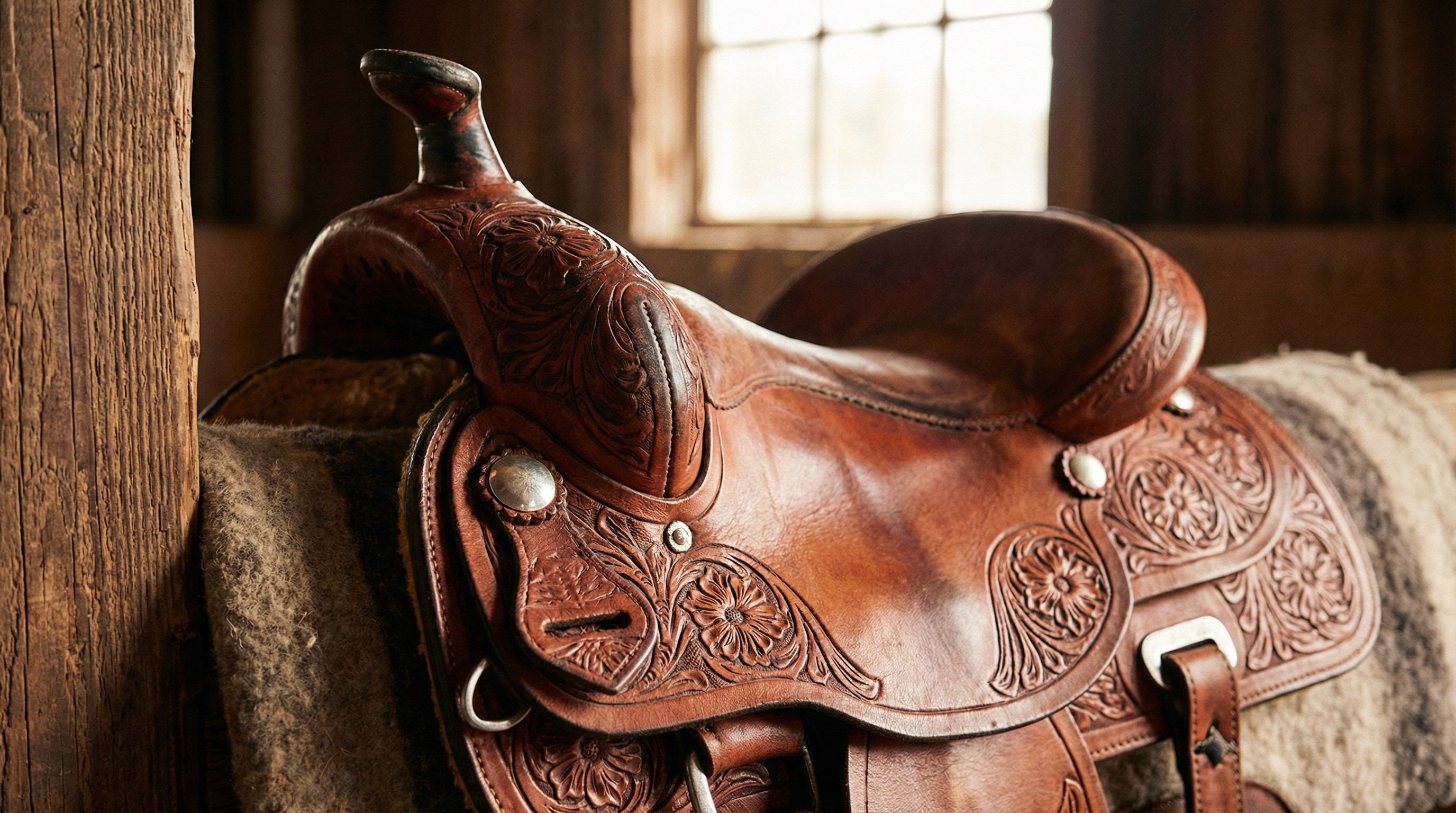
Creating a Western saddle remains a highly skilled craft. Traditional saddlers carefully shape leather, assemble the saddle around a wooden tree, and often add hand-tooled designs that reflect the maker’s artistry.
Each saddle requires patience and attention to detail. From carving leather patterns to stitching thick hides by hand, the process can take dozens of hours. When properly made and maintained, a saddle can last for decades and is often passed down through generations.
A Legacy of Western Craft
Today, the Western saddle remains one of the most enduring symbols of Western culture. Whether used by ranchers, riders, or collectors, it continues to represent the values of craftsmanship, durability, and respect for tradition.
At Provenance West, this same spirit of craftsmanship inspires the creation of heritage objects such as spurs, buckles, and bosals. Like the saddle makers who came before, these artifacts honor the traditions of the American West while preserving the legacy of the craftsmen who shaped it.
A Symbol of the American West
Few objects represent the spirit and heritage of the American West as powerfully as the Western saddle. Built for endurance, designed for work, and shaped by generations of skilled craftsmen, the saddle became an essential tool for life on the frontier. More than riding equipment, it reflects a long tradition of craftsmanship and the culture of the working cowboy.
Origins in Vaquero Tradition
The Western saddle traces its origins to Spanish horsemanship. In the 1500s, Spanish explorers brought horses and riding equipment to the Americas. Over time, skilled horsemen known as vaqueros refined saddle design to better manage cattle across the vast ranchlands of Mexico and the American Southwest.
These early saddles introduced features that remain central to Western saddle design today, including the saddle horn used for roping cattle and a deep seat that provided stability during long hours of riding.
Built for the Demands of the Range
As ranching expanded across the American West in the 19th century, the saddle evolved into a highly practical working tool. Cowboys spent long days riding across rugged terrain, requiring equipment that was durable, comfortable, and reliable.
The Western saddle was designed to distribute the rider’s weight evenly across the horse’s back, allowing both horse and rider to work for extended periods. Wide stirrups provided balance, while the sturdy horn allowed riders to control cattle during roping.
These design elements were not decorative—they were solutions developed through generations of real work on the land.
The Art of Saddle Making
Creating a Western saddle remains a highly skilled craft. Traditional saddlers carefully shape leather, assemble the saddle around a wooden tree, and often add hand-tooled designs that reflect the maker’s artistry.
Each saddle requires patience and attention to detail. From carving leather patterns to stitching thick hides by hand, the process can take dozens of hours. When properly made and maintained, a saddle can last for decades and is often passed down through generations.
A Legacy of Western Craft
Today, the Western saddle remains one of the most enduring symbols of Western culture. Whether used by ranchers, riders, or collectors, it continues to represent the values of craftsmanship, durability, and respect for tradition.
At Provenance West, this same spirit of craftsmanship inspires the creation of heritage objects such as spurs, buckles, and bosals. Like the saddle makers who came before, these artifacts honor the traditions of the American West while preserving the legacy of the craftsmen who shaped it.