Craft Tradition Vaquero Bosal
Craft Tradition Vaquero Bosal
Heritage Articles
Heritage Articles
A Living Tradition.
A Living Tradition.
Celebrating the enduring artistry of craftsmanship across the American West.
Celebrating the enduring artistry of craftsmanship across the American West.
“The objects of the West were never only functional. They carried skill, identity, and the mark of the maker.”
“The objects of the West were never only functional. They carried skill, identity, and the mark of the maker.”
— Provenance West
A Refined Tool of Control
The bosal is one of the most elegant and subtle tools in Western horsemanship. Used as part of the traditional hackamore system, it allows a rider to guide a horse without the use of a metal bit.
Through pressure and release, the bosal communicates with the horse through balance rather than force.
Roots in Vaquero Tradition
The bosal emerged from the vaquero traditions of California and Mexico, where horsemanship was treated as both a practical skill and an art form.
Young horses were often trained first in a bosal before transitioning to more advanced bridles. This system emphasized patience, sensitivity, and trust between horse and rider.
The result was a style of riding known for its quiet precision and refined control..
Braiding as Craft
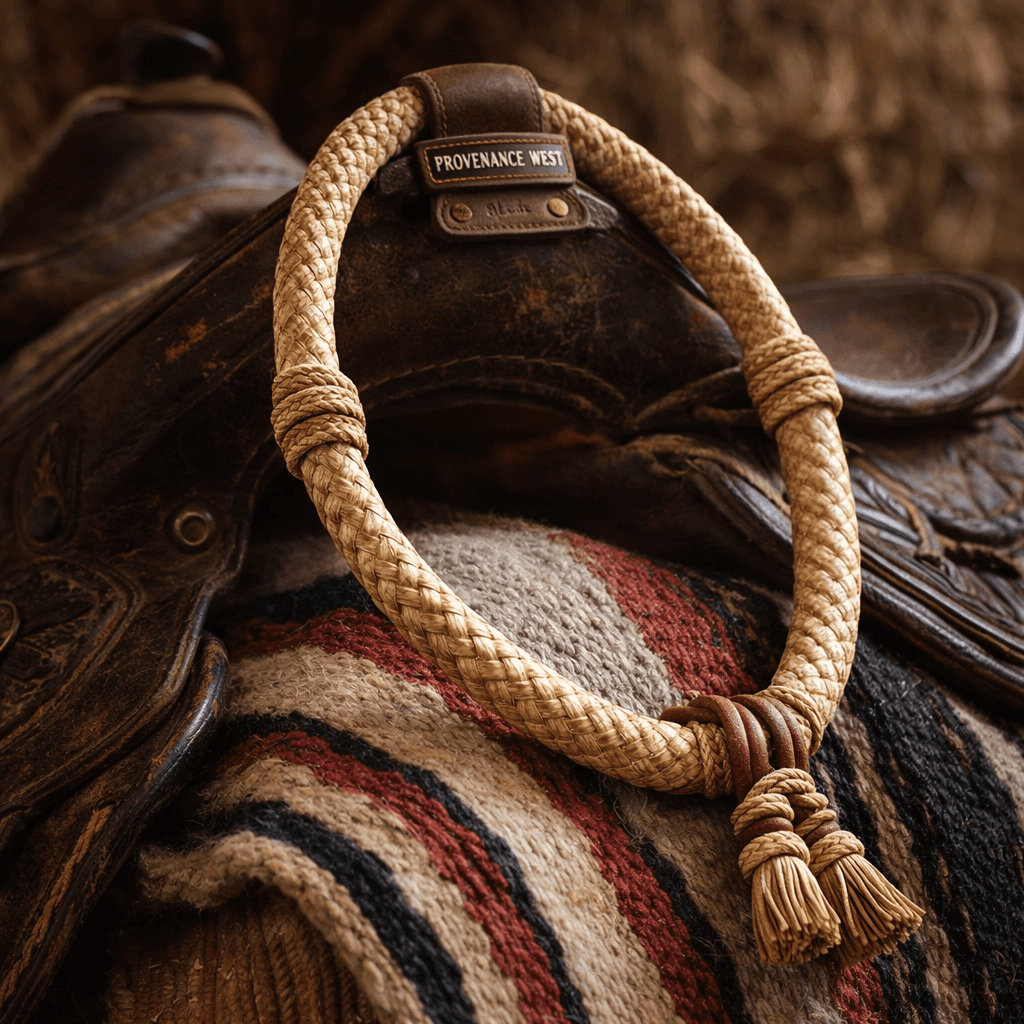
Creating a traditional bosal requires a high level of craftsmanship. Makers braid rawhide strands around a shaped core, building a strong yet flexible structure.
The braiding pattern, balance, and proportions all affect how the bosal functions in the rider’s hands.
A well-made bosal reflects both technical skill and deep knowledge of horsemanship.
Preserving a Living Tradition
Creating a traditional bosal requires a high level of craftsmanship. Makers braid rawhide strands around a shaped core, building a strong yet flexible structure.
The braiding pattern, balance, and proportions all affect how the bosal functions in the rider’s hands.
A well-made bosal reflects both technical skill and deep knowledge of horsemanship.
A Refined Tool of Control
The bosal is one of the most elegant and subtle tools in Western horsemanship. Used as part of the traditional hackamore system, it allows a rider to guide a horse without the use of a metal bit.
Through pressure and release, the bosal communicates with the horse through balance rather than force.
Roots in Vaquero Tradition
The bosal emerged from the vaquero traditions of California and Mexico, where horsemanship was treated as both a practical skill and an art form.
Young horses were often trained first in a bosal before transitioning to more advanced bridles. This system emphasized patience, sensitivity, and trust between horse and rider.
The result was a style of riding known for its quiet precision and refined control..
Braiding as Craft
Creating a traditional bosal requires a high level of craftsmanship. Makers braid rawhide strands around a shaped core, building a strong yet flexible structure.
The braiding pattern, balance, and proportions all affect how the bosal functions in the rider’s hands.
A well-made bosal reflects both technical skill and deep knowledge of horsemanship.
Preserving a Living Tradition
Creating a traditional bosal requires a high level of craftsmanship. Makers braid rawhide strands around a shaped core, building a strong yet flexible structure.
The braiding pattern, balance, and proportions all affect how the bosal functions in the rider’s hands.
A well-made bosal reflects both technical skill and deep knowledge of horsemanship.